10 min read
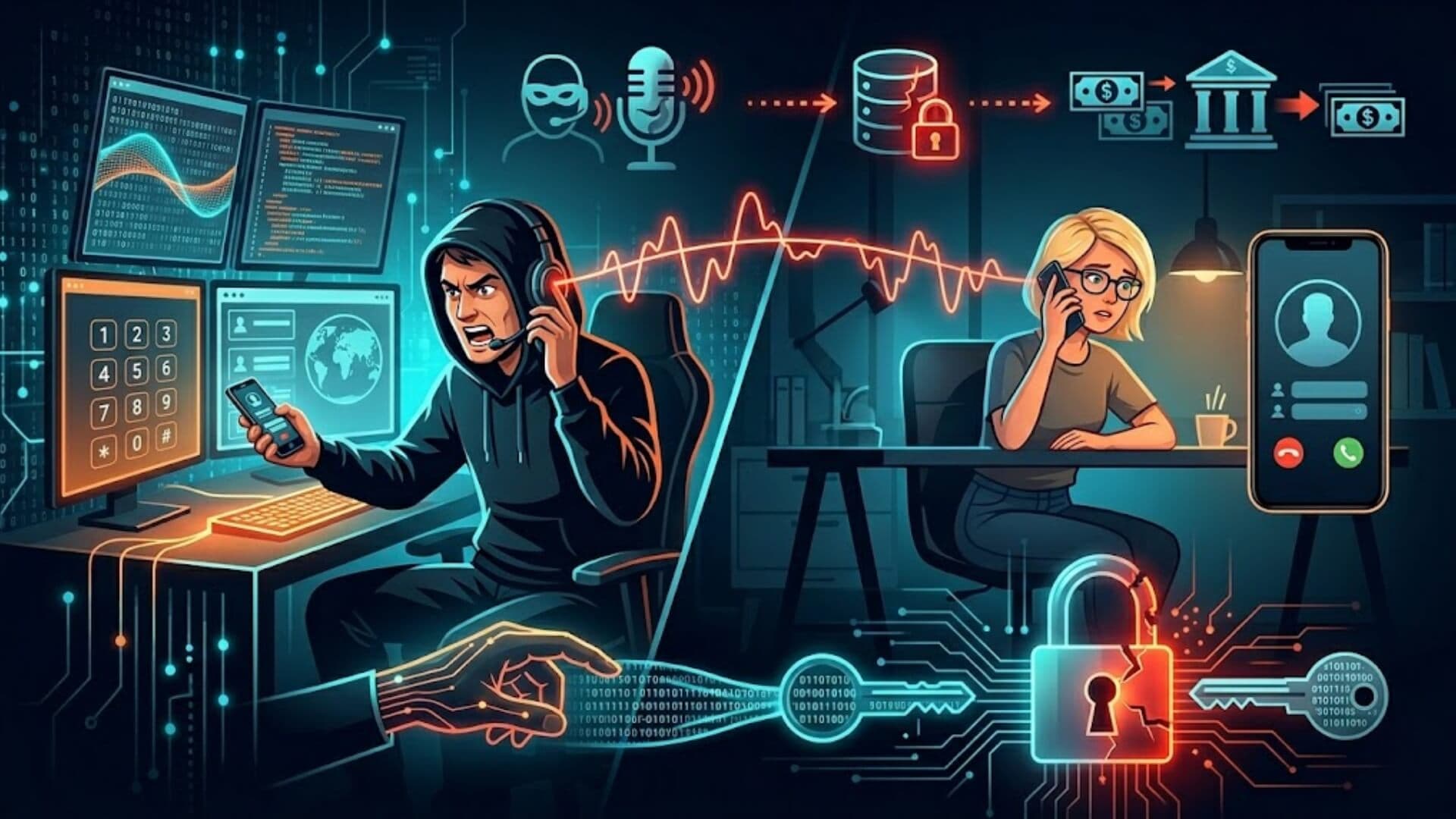
What is vishing? It's a phone scam where criminals pretend to be someone you trust, such as your bank, the IRS, or a tech support agent, to trick you into handing over personal information or money. Unlike email phishing, vishing happens in real time. The caller sounds confident. They know your name. They may even know your account number. That's what makes it dangerous.
This article explains how vishing works, the most common tactics scammers use, and what you can do to protect yourself before you become a target.
What is vishing?Link to heading

Vishing, short for voice phishing, is a phone-based scam where attackers call victims and pose as trusted organizations to steal sensitive information. This includes login credentials, credit card numbers, and bank account details, which criminals then use for fraud, identity theft, or financial theft.
In a typical vishing attack, the caller pretends to be from a bank, the IRS, or a delivery service. They often use toll-free numbers or VoIP technology to make the call appear legitimate. The goal is to create enough trust for the victim to hand over personal data without question.
Vishing does not always start with a phone call. Many attacks begin with a phishing email that instructs the recipient to call a specific number. Once on the call, scammers use social engineering to pressure the target into sharing sensitive details.
Vishing scams most often target the elderly, new employees, and staff who regularly take external calls as part of their role. Defending against these attacks requires awareness, careful habits, and strong email security tools.
>>> Learn more: What is a Whaling attack? How does a Whaling attack work?
What do vishing attackers want?Link to heading
To fully understand what is vishing and why it works, you need to know what attackers are actually after. The primary goal is to obtain confidential information from individuals or organizations through deception. Attackers use this information for financial gain, identity fraud, account takeovers, or other criminal purposes.
The types of information commonly targeted include:
- Financial information, such as bank account numbers and credit card details
- Personal identifiers, including Social Security numbers and government-issued identification numbers
- Security information, such as passwords, PINs, authentication codes, and login credentials
>>> Learn more: What is a Clone Phishing attack? Detection and prevention
Types of vishingLink to heading

If you are wondering what is vishing, it is important to understand that these attacks can take many different forms. While the techniques vary, they all rely on manipulating trust, fear, or urgency to convince victims to reveal sensitive information. Below are some of the most common vishing methods used by cyber criminals.
WardialingLink to heading
Wardialing involves the use of automated systems that place calls to large numbers of phone lines within specific regions or area codes. Attackers often pretend to represent local banks, government agencies, or law enforcement departments. These calls usually feature pre-recorded messages that create a sense of concern or urgency, encouraging victims to provide personal details such as banking information or identification numbers.
VoIP (Voice over Internet Protocol)Link to heading
Cyber criminals frequently use VoIP technology to conceal their real identities and conduct large-scale vishing campaigns. By generating numerous virtual phone numbers, they can place calls that appear to come from local or toll-free numbers. This makes it more difficult for recipients to determine whether a call is legitimate or fraudulent.
Caller ID spoofingLink to heading
Caller ID spoofing allows attackers to manipulate the information displayed on a recipient’s phone. Scammers may make the call appear to come from trusted organizations, such as a tax authority, bank, or police department. By presenting a familiar name or number, they increase the likelihood that the victim will trust the caller and follow instructions.
Tech support scamsLink to heading
In this type of attack, fraudsters claim to work for well-known technology companies such as Microsoft or Apple. They inform the victim of a supposed problem with their computer, smartphone, or online account. The attacker may then request remote access to the device or ask for login credentials under the pretense of fixing the issue.
Voicemail phishingLink to heading
Voicemail phishing relies on deceptive voice messages rather than live conversations. Attackers leave messages claiming to be from banks, government agencies, or service providers and urge the recipient to call back immediately. When the victim returns the call, the scammer attempts to collect sensitive information through a convincing conversation.
Dumpster divingLink to heading
Although less common, dumpster diving can support vishing campaigns by helping attackers gather information from discarded business documents. These records may contain employee names, account details, contact information, or organizational data. Criminals use the collected information to make their phone scams appear more credible and personalized.
Understanding these techniques can help answer the question, "what is vishing?" and make it easier to recognize the warning signs before a scam succeeds.
Why do people engage in vishing?Link to heading

Cyber criminals favor voice-based scams because phone calls give them two powerful tools for manipulation: urgency and trust. A live conversation can catch victims off guard and pressure them into making quick decisions without taking time to verify the request.
Unlike emails, phone calls allow scammers to build rapport, adjust their approach in real time, and respond directly to a person's reactions. This makes it easier to exploit emotions such as fear, panic, curiosity, or trust.
What is vishing becoming in the age of AI? A far more dangerous threat. Vishing has grown more appealing to attackers as technology evolves. Low-cost or free tools, including VoIP services and caller ID spoofing software, let scammers disguise their identities and make calls appear to come from legitimate organizations. Some cyber criminals now use voice-cloning tools that can imitate a person's speech patterns and tone.
As deepfake voice technology becomes more advanced and widely available, distinguishing between genuine and artificial voices is becoming more difficult. This development makes vishing attacks more convincing and increases the risks faced by both individuals and organizations.
What's the difference between vishing, phishing, and smishing?Link to heading
To fully understand what is vishing, it helps to compare it with other common phishing techniques. Vishing, phishing, and smishing are all forms of social engineering attacks designed to steal sensitive information, gain access to accounts, commit fraud, or obtain money from victims. The primary difference between them lies in the communication channel used to carry out the scam.
Here is how these three attack methods differ:
- Vishing: Voice-based scams that use phone calls or voice messages to pressure victims into disclosing confidential information.
- Phishing: Email-based scams that encourage victims to click malicious links, visit fraudulent websites, download malware, or reveal personal information.
- Smishing: SMS or text message scams that attempt to lure recipients into clicking harmful links, opening malicious content, or visiting fake websites.
How do vishing emails avoid detection?Link to heading

When learning what is vishing, many people assume that every attack starts with a phone call. In reality, some vishing campaigns begin with a phishing email. In these cases, the attacker sends a convincing email that appears to come from a trusted organization and instructs the recipient to call a specific phone number. Once the victim makes contact, the scammer continues the attack through a voice conversation.
When a vishing campaign starts with an email, several factors may help it bypass traditional email security controls.
No links in the emailLink to heading
Many email security solutions are designed to identify suspicious links and block messages that contain known malicious URLs. A vishing email often avoids including links altogether. Instead, it directs the recipient to call a phone number. Since there are no clickable links or attachments to analyze, the message may appear less suspicious to automated security tools.
Email appears to come from a legitimate senderLink to heading
Attackers may use email addresses that look trustworthy or send messages from personal email accounts that can pass basic authentication checks. Depending on how the email is structured, it may not trigger protections such as DMARC, SPF, or DKIM verification failures. As a result, the message can appear legitimate to both users and security systems.
Weak or outdated email security solutionsLink to heading
If an email passes initial security checks and contains no obvious signs of malicious activity, some email filtering systems may classify it as low risk and allow it into the recipient's inbox. Organizations can reduce this risk by using advanced email security solutions that are capable of detecting phishing attempts, business email compromise attacks, and other forms of email-based fraud.
Another challenge is that phone numbers are not monitored and shared across the cybersecurity community as consistently as malicious URLs or domains. Because there is less threat intelligence available for phone numbers, vishing campaigns often have a better chance of bypassing conventional email security controls and reaching potential victims.
Understanding what is vishing and how these email-assisted attacks work can help individuals and organizations identify suspicious messages before they escalate into a voice phishing scam.
What are the signs of vishing?Link to heading

Being able to recognize the warning signs of a vishing attack can help protect your personal information, financial accounts, and online identity. Below are some of the most common indicators that a phone call may be part of a vishing scam.
Spoofed phone numbersLink to heading
Many vishing attacks rely on caller ID spoofing to make a phone number appear trustworthy. Scammers often use numbers that look like they belong to banks, government agencies, delivery services, or other legitimate organizations.
Even if the caller ID displays a familiar company name or a local number, it is important to remain cautious and verify the caller's identity independently. Knowing what is vishing can help you understand why a familiar number should never be treated as proof that a caller is legitimate.
Aggressive call tacticsLink to heading
Vishing scammers frequently use pressure, fear, or urgency to influence their targets. They may claim there is an urgent problem with your account, suspicious activity has been detected, or immediate action is required to avoid penalties. These tactics are designed to create panic and encourage quick decisions.
Some attackers may also act as if they already know you or reference previous conversations, workplace relationships, or management structures. This approach helps build trust while gradually steering victims toward revealing sensitive information or taking risky actions.
Unexpected requests for sensitive informationLink to heading
One of the clearest signs of a vishing attack is an unsolicited request for confidential information. Scammers often ask for passwords, PINs, one-time verification codes, banking details, or other sensitive data. Legitimate organizations generally do not request this type of information through unexpected phone calls. Any caller asking for such details should be treated with suspicion.
Use of publicly available informationLink to heading
Attackers often gather information from social media profiles, public databases, company websites, or previous data breaches. During the call, they may mention your address, employer, family members, or recent activities to make the conversation seem authentic.
While this information can make the caller appear credible, it should not be viewed as proof of legitimacy. Publicly available details can be easily collected and used to support a convincing scam.
Verify independentlyLink to heading
Even if a caller sounds professional and provides information that appears accurate, avoid making decisions during the call. If something feels suspicious, end the conversation and contact the organization directly using a phone number listed on its official website or from a trusted source. Never rely on phone numbers, links, or contact details provided by the caller during a potentially fraudulent conversation.
Learning what is vishing is only the first step. Verifying requests through official channels remains one of the most effective ways to avoid becoming a victim.
What should you do if you've experienced a vishing attack?Link to heading

If you believe you have been targeted by a vishing scam or have already shared sensitive information, taking prompt action can help reduce the impact and limit further damage. Consider the following steps:
- Contact your bank, credit card provider, or financial institution immediately. Inform them of the incident and request additional monitoring or temporary restrictions on affected accounts.
- Change any passwords, PINs, security questions, or authentication credentials that may have been exposed. Use strong and unique passwords for each account.
- Notify the organization that the scammer claimed to represent. They may be able to assist with the investigation and alert other customers or employees about similar scams.
- Report the incident to the appropriate authorities, such as the Federal Trade Commission (FTC) or the Internet Crime Complaint Center (IC3), to help support fraud prevention and law enforcement efforts.
- If you disclosed business-related information, notify your organization's IT department, cybersecurity team, or security officer immediately so they can assess the situation and implement response measures.
Vishing attacks continue to be effective because scammers rely on trust, urgency, and human behavior rather than technical vulnerabilities alone. However, understanding what is vishing, how these scams operate, and how to recognize their warning signs can significantly reduce the risk of becoming a victim. The next step is learning practical strategies that can help prevent vishing attacks before they succeed.
How can you prevent vishing and phone scams?Link to heading
Protect your accounts with multi-factor authentication (MFA) Link to heading
MFA adds an extra layer of security by requiring users to confirm their identity through two or more verification methods before they can access an account. So even if a scammer gets hold of a password through a vishing call, they still can't get in without clearing the additional verification step.
Strengthen your email securityLink to heading
Vishing attacks often start with an email. Relying on basic email filters isn't enough to stop modern threats like phishing and business email compromise (BEC). A dedicated email threat defense solution, can detect and neutralize phishing attempts before they reach your team and cause serious damage.
Understanding what is vishing also means recognizing that many voice phishing attacks begin with a convincing email designed to gain a victim's trust.
Register with a Do Not Call list Link to heading
Sign up with a national Do Not Call registry. These government-maintained lists cut down on unsolicited calls from legitimate businesses, which makes suspicious calls easier to spot. It won't stop scammers, but it reduces the noise.
Don't answer unsolicited callsLink to heading

Train employees to follow these habits:
- Don't pick up calls from numbers you don't recognize. Let them go to voicemail and listen to the message before deciding what to do. Remember, caller IDs can be faked.
- If something feels off during a call, hang up and block the number. Scammers can clone a person's voice from a 3-second audio clip and use it to commit fraud later.
- Don't call back unknown missed numbers. Look up the official contact details from a trusted source, such as the company's website or your account statement.
- Don't press buttons or answer yes/no questions on unsolicited calls. Scammers use these prompts to confirm they've reached a real, responsive person, which puts you on their list for more attempts.
Recognize social engineering tacticsLink to heading
A key part of learning what is vishing is understanding how attackers manipulate people through fear, urgency, and trust.
Teach employees to watch for these red flags during a call:
- Threats of immediate account closure, legal action, or arrest
- Promises of prizes or deals that require an instant decision
- Callers who act overly friendly or claim a personal connection to lower your guard
- Pressure to keep the call secret or avoid checking with anyone else
If a caller uses any of these tactics, end the call. Legitimate organizations don't operate this way.
When reviewing a suspicious email or text message, check these details carefully:
- The sender's name, email address, and phone number
- The tone and urgency of the language
- Any errors or inconsistencies in the content
- What the call to action is asking you to do, especially if it demands immediate action
Never share sensitive information over the phoneLink to heading
Don't give out account numbers, PINs, passwords, or any personal or company data to an unsolicited caller. If something feels wrong, trust that instinct. Hang up and contact the organization through a verified channel.
Ask the caller to prove their identityLink to heading
Any legitimate representative from a real organization will confirm who they are, why they're calling, and who they work for. Write down their name, then call the organization back using a number you find on their official website or your own records, not the number they give you. This one step can stop most vishing attempts cold.
Train employees on phishing preventionLink to heading
Regular, up-to-date training is one of the most effective defenses against vishing. Programs should cover the latest cyberthreat trends, how to respond when targeted, and how to protect company data and finances. A well-trained team is an active line of defense, not just a potential weak point.
ConclusionLink to heading
Vishing is one of the simplest cyberattacks to execute and one of the most effective. Scammers don't rely on complex tools. They rely on catching people off guard. Understanding what is vishing and how it works puts you ahead of most targets. Verify callers, question urgency, and never hand over account details over the phone. If something feels wrong, hang up.
A single suspicious call, handled correctly, can stop an attack before it starts. That awareness is your strongest defense.
>>> What if scammers are using information from your website to build trust during a vishing attack? Activate W7SFW and add an extra layer of protection against reconnaissance attempts.