10 min read
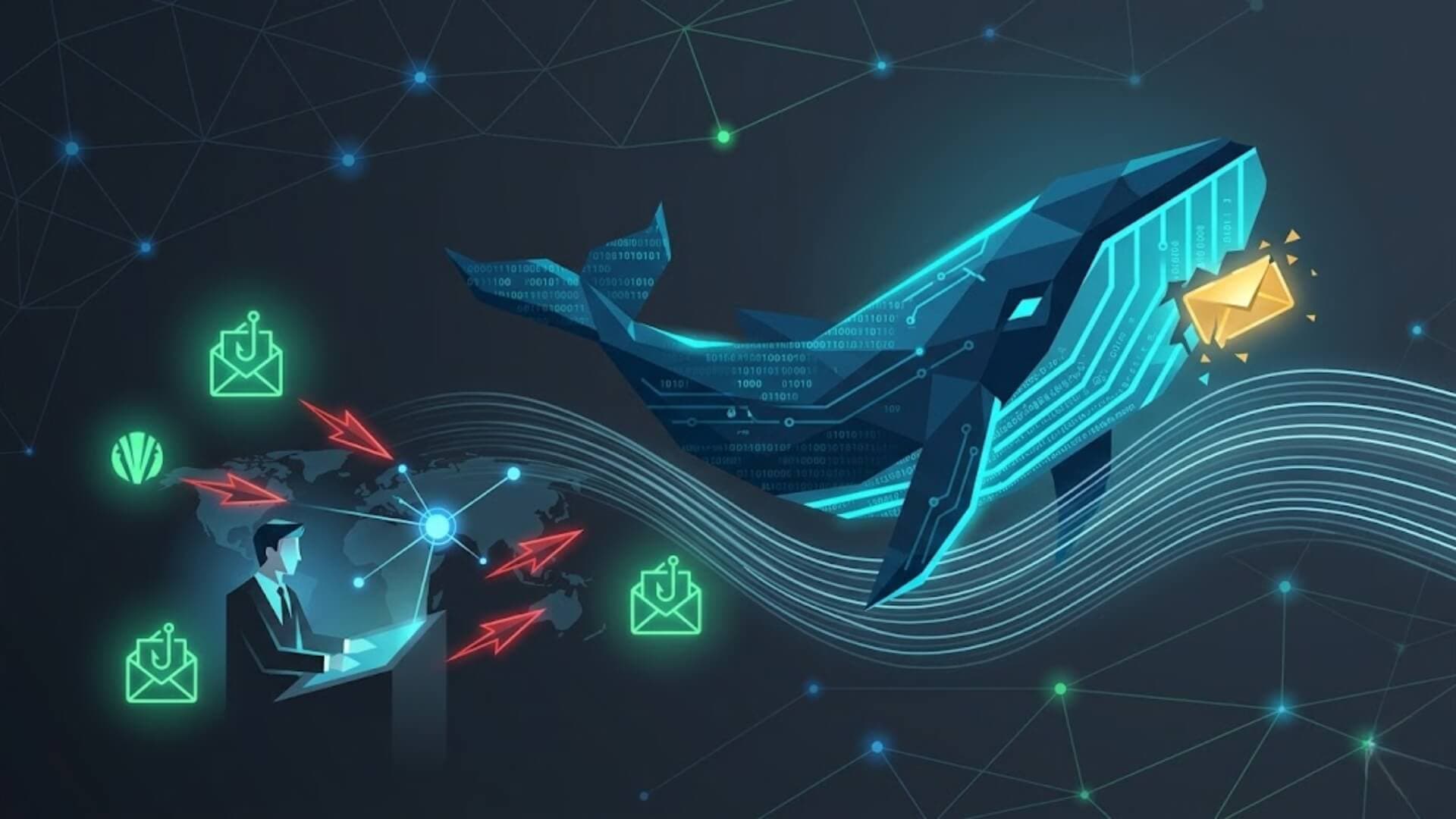
Most cyberattacks exploit technical vulnerabilities. A whaling attack takes a different approach by exploiting trust. Instead of targeting large groups of users, attackers focus on senior executives and decision-makers, using carefully crafted emails to request money, credentials, or sensitive business information.
Because these attacks leverage authority and urgency rather than malware, they can be difficult to recognize. This article explains what is a whaling attack is, how it works, the warning signs to watch for, and the steps organizations can take to reduce their risk.
What is a Whaling attack?Link to heading

A whaling attack, also called whaling phishing, is a highly targeted form of phishing aimed at senior executives. Unlike broad phishing campaigns, it is designed to look like a legitimate, trusted communication. The attacker's objective is to manipulate the target into revealing sensitive information, such as login credentials, internal data, or access to restricted areas of the network.
These attacks rarely happen overnight. Most are executed over weeks or even months. The attacker's priority in the early stages is not to extract information immediately; it is to build genuine trust with the target. Moving too fast risks raising suspicion.
By taking a slow, methodical approach and consistently presenting themselves as a credible contact, the attacker creates a dynamic where the target sees no reason to question the requests being made.
>>> Learn more: What is phishing? Tips to identify and prevent online scams
How Whaling attacks workLink to heading
To fully understand what is a Whaling attack, it is important to understand how these attacks are planned and executed. A whaling attack typically begins through a communication channel that both the impersonated person and the target use regularly, most often email or a workplace messaging platform.
At first contact, there is usually nothing to trigger suspicion. The attacker may use a username identical to a known colleague or a spoofed email address that appears legitimate at first glance.
In many cases, the attacker does not go directly after the executive. Instead, they first compromise the email account of someone already close to the target, such as a trusted colleague or direct report. From inside that account, they can initiate contact that feels entirely natural.
To make the conversation convincing, they include specific personal or professional details about the target that the real account owner would plausibly know. Most of that information is not difficult to find, as LinkedIn profiles, company announcements, and social media posts provide more than enough material to build a believable cover.
>>> Learn more: What is a malicious website? How do malicious websites work?
Differences between Whaling, Phishing, and Spear PhishingLink to heading

When discussing what is a Whaling attack, it is helpful to compare it with other common forms of phishing. Although whaling, phishing, and spear phishing all fall under the same category, each one operates differently and targets victims in distinct ways.
Phishing is the broadest form of the three. It works by tricking someone into handing over sensitive information through a deceptive electronic message, typically an email that appears to come from a legitimate source. The message usually creates a sense of urgency, telling the recipient they need to act immediately to resolve an issue. A link in the email takes them to a fake website built to mimic a real one, complete with familiar logos and formatting.
Once on the site, the victim enters their login credentials, which are captured directly by the attacker. Those credentials are then used to access the victim's real account, often a bank or financial platform, where funds can be transferred out without the victim's knowledge.
Spear phishing follows the same basic method but takes a more focused approach. Rather than sending the same message to a large list of addresses, the attacker targets a specific individual and personalizes the communication to make it more convincing. This might include references to the victim's recent activity or location.
For example, an attacker who observed someone using an ATM at a particular branch could send a message claiming that card-skimming activity was detected at that exact location and time, prompting the victim to log in and change their password. When the victim does so, their current credentials are captured. In some cases, the attacker will attempt to use those credentials immediately before the victim notices anything is wrong.
Whaling shares the targeted nature of spear phishing but introduces a critical difference in method. If you are wondering what is a Whaling attack and how it differs from spear phishing, the answer lies in impersonation.
Rather than simply personalizing a message, the attacker actively impersonates someone the victim already knows and trusts, typically a colleague, manager, or business partner. That act of impersonation is what sets whaling apart.
It shifts the attack from exploiting a generic sense of urgency to exploiting an established personal or professional relationship, which makes it significantly harder for the target to recognize the threat.
How do you recognize a whaling attack?Link to heading

You can identify a whaling attack by looking for these common warning signs:
- Check the sender: Verify the sender's email address carefully. Attackers often use addresses that look similar to legitimate ones.
- Review the subject line: Whaling emails often create urgency with phrases such as "Urgent", "Important", or "Immediate Action Required".
- Inspect links and attachments: Avoid opening unexpected attachments or clicking links without verification, especially if the email requests sensitive information.
- Examine the content: Be cautious if the email asks for money transfers, login credentials, confidential data, or other sensitive actions.
- Verify the request: If something feels unusual, contact the sender through a trusted channel, such as a phone call or official email address, before taking action.
- Watch for personalization: Attackers often use information from social media, company websites, or public records to make their messages appear more convincing.
How to block Whaling attacksLink to heading
A strong defense against whaling attacks requires multiple layers of protection:
- Many whaling emails can be blocked at the email gateway through advanced anti-spam and anti-malware solutions.
- Email authentication technologies such as DMARC, DKIM, and SPF help verify whether messages sent from a domain are legitimate or fraudulent.
- Real-time email filtering and scanning tools can identify suspicious links, attachments, and malicious content before users interact with them.
- Anti-impersonation solutions are designed to detect common social engineering techniques used in whaling attacks and can stop fraudulent messages from reaching targets.
- Regular security awareness training helps employees recognize whaling attempts and follow established procedures, such as independently verifying wire transfer requests before taking action.
By understanding what is a Whaling attack and combining technical controls with employee awareness, organizations can significantly reduce the risk of executive-targeted phishing attacks.
Target of Whaling phishing attacksLink to heading

Cybercriminals launch whaling attacks for several reasons:
- Financial gain: Attackers may trick victims into transferring money through fraudulent payment or wire transfer requests.
- Unauthorized access: Stolen credentials can give attackers access to corporate systems, allowing them to move through the network or gain elevated privileges.
- Supply chain compromise: Attackers may target executives to gain access to vendors, partners, or other organizations connected to the company.
- Corporate espionage: Successful attacks can result in the theft of trade secrets, confidential documents, or intellectual property that may benefit competitors.
- Malware deployment: Victims may be persuaded to download malicious software, including ransomware, keyloggers, or other forms of malware.
- Personal motives: In some cases, attackers seek to damage an executive’s reputation or cause disruption due to personal grievances or targeted harassment.
How to protect yourself from Whaling phishing attacksLink to heading
Understanding what is a Whaling attack is an important first step in building an effective defense. The first step in protecting yourself and your organization from whaling attacks is to educate everyone who could be targeted, as well as the people attackers might use to reach them. Since this may include a large part of the company, it is often best to include guidance on how to avoid whaling attacks as part of broader training on phishing and other email threats.
Preventing whaling attacks starts with changing the way you look at incoming messages. When you receive an email, ask yourself whether you were actually expecting to hear from that person. Then look closely at the message itself. Think about whether anything feels unusual, not only in what is being said, but also in how it is written, including punctuation, emojis, tone, or any other detail that seems out of place.
In some cases, the warning signs are easy to spot. For example, if the email address looks believable but is not the one the person normally uses, that should raise concern. If someone usually sends messages from DJohn@yourorganization.com but you receive one from DavisJohn@yourorganization.com, that could be a sign of fraud.
Unless there is a clear reason for the change, the address may be fake. The same is true when the sender’s name seems correct but the message comes from outside the organization.
Executives also need to be careful about what they share on social media. Personal and professional details posted online can give attackers the information they need to build convincing whaling attacks. If a senior leader receives a message that refers to something recently shared on social media, it may be an attempt to gain trust before asking for sensitive information.
ConclusionLink to heading
Understanding what is a Whaling attack is the first step toward reducing the risk it poses to an organization. Unlike traditional phishing campaigns, whaling attacks focus on executives and other high-value targets by abusing trust, authority, and familiar business relationships. Because these attacks are often built around real information and realistic communication, they can be difficult to detect.
Organizations can lower their exposure by combining technical controls, employee training, and clear verification procedures. When leaders and staff know how whaling attacks work and recognize the warning signs, they are in a much stronger position to prevent financial loss, data theft, and unauthorized access.
>>> Is your WordPress website unintentionally exposing too much information to automated data collection tools? Activate W7SFW to limit unwanted access and strengthen your website's overall security.