10 min read
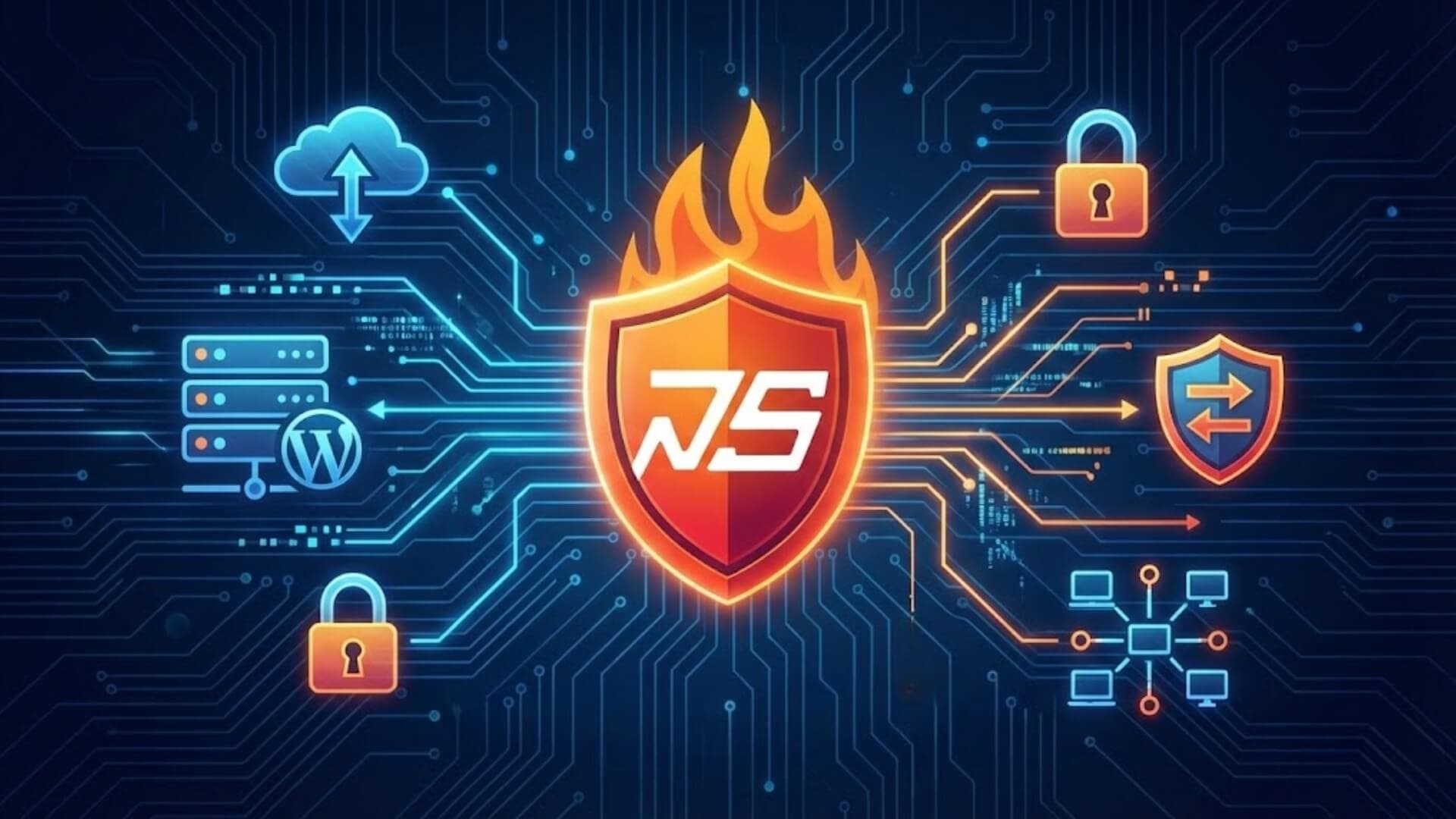
WordPress is currently the most widely used CMS platform in the world, and at the same time, it has become one of the primary targets for hackers. Even with firewall plugins installed, many websites are still exploited through XSS, SQL Injection, malware insertion, or administrative account takeover within just a few minutes. The root cause lies in the fact that most plugin-based firewalls only inspect requests after WordPress has already been loaded.
This is why W7SFW was developed - a new firewall solution that operates entirely outside of WordPress. More than just a firewall specifically designed for WordPress websites, W7SFW fundamentally changes how websites are protected by controlling and blocking access from the outermost layer. So what exactly is W7SFW, how does it work, and how is it different from traditional firewalls? Let’s take a closer look.
What is W7SFW?Link to heading

W7SFW is a dedicated firewall for WordPress that operates using a proactive security model. Instead of allowing requests to enter WordPress and then inspecting them like traditional firewall plugins, W7SFW blocks and controls access at the outer layer, preventing unauthenticated traffic from ever reaching the WordPress system.
Simply put, when W7SFW’s “Blacklist All” mechanism is activated, the system denies all incoming traffic by default and only allows requests that have been verified as legitimate through a combination of Default Rules and a Whitelist. As a result, W7SFW is capable of eliminating up to 99% of malicious traffic before it enters WordPress.
This approach helps websites remain secure and stable, reduces pressure on the origin server, and ensures smooth performance even when the site is under continuous attack.
Why was W7SFW created?Link to heading
Most existing WordPress firewalls suffer from a fundamental limitation: they intervene too late. Because they are implemented as plugins running inside WordPress or directly on the server, malicious requests still have to pass through the web server, load the WordPress core, and trigger internal components before the firewall begins its inspection.
At this stage, plugin-based firewalls act as reactive security measures rather than proactive defenses. Even if a request is blocked afterward, server resources have already been consumed, and in some cases, dangerous payloads may have already exploited logic flaws or zero-day vulnerabilities. As a result, risks are not eliminated at the earliest point.
In addition, many firewalls operate on an “allow by default” mindset, meaning all traffic is permitted to enter first and only then analyzed for threats. This model places absolute trust in detection mechanisms, while in reality, a single successful malicious request is enough to cause serious damage.
Reliance on attack signatures is another major weakness. Firewalls may block known threats effectively but are easily bypassed by zero-day exploits, mutated payloads, or logic-based attacks. Moreover, running a firewall as a plugin increases system load, creates compatibility issues, and can lead to false positives - especially on high-traffic websites.
W7SFW was built specifically to address these limitations. Instead of running inside WordPress, W7SFW operates as an external firewall layer, blocking requests at the outer perimeter before they ever reach WordPress.
The system applies an inverted security model: “Blacklist All” - blocking all access by default and only allowing verified, safe requests through Default Rules and Whitelisting. At the same time, W7SFW focuses on analyzing traffic behavior and request validity, rather than relying solely on signatures, reducing false positives and making it significantly harder for attackers to bypass using variant techniques.
How does W7SFW work?Link to heading

W7SFW is designed around a block-first, allow-later principle, enabling proactive access control right from the website’s entry point.
When a request is sent to a website, W7SFW activates the Blacklist All mechanism and temporarily blocks all incoming traffic, regardless of whether it originates from users or bots. This ensures that uncontrolled requests cannot directly reach WordPress, eliminating most risks at the outer layer.
After this initial blocking phase, requests are analyzed based on Default Rules to evaluate their behavior, structure, and legitimacy. Requests that meet security criteria are added to the Whitelist and are allowed to access WordPress seamlessly. Abnormal or invalid requests continue to be blocked. This approach significantly enhances security while minimizing the risk of blocking legitimate users.
W7SFW also integrates two-factor authentication using extensions and passwords for WordPress login and admin areas. Even if a password is compromised, attackers cannot gain access without passing the additional authentication layer, effectively preventing brute-force attacks and administrative takeovers.
Most importantly, the system automatically blocks access to sensitive files and directories that are commonly scanned by bots. This feature is enabled by default once the firewall is activated, requires no manual configuration, and significantly reduces the risk of data exposure caused by misconfigurations.
How is W7SFW different from a plugin firewall?Link to heading
|
W7SFW |
Plugin Firewall |
|
|
Operating position |
An external protection layer that blocks and controls all traffic before it reaches WordPress |
Runs inside WordPress or only after the request has passed through the web server |
|
Protection model |
Block first - allow later: blocks all requests by default and only permits verified traffic via Default Rules & Whitelist |
Detect - react: allows requests into WordPress first, then inspects and handles them |
|
Zero-day protection |
Very high. Does not rely on attack signatures; analyzes behavior and request structure |
Low. Mostly signature-based and vulnerable to new variants |
|
Blocking redirects, scams, webshells |
High. Stops malicious requests at the outer layer before they touch WordPress |
Lower. Threats are detected only after entering the system |
|
Performance impact |
Reduces load on both the server and WordPress |
Increases load because WordPress must be loaded for every request |
|
Ease of use |
Very easy. No complex rule tuning required |
More difficult. Prone to 403 errors and manual rule adjustments |
|
Plugin conflict risk |
None. Operates independently outside WordPress |
High. Can conflict with other plugins, themes, or caching systems |
|
Long-term stability |
High. Not affected by WordPress, plugin, or theme updates |
Lower. Issues often arise after updates |
|
Technical knowledge required |
Low. Non-technical users can operate it safely |
High. Non-experts are more likely to encounter problems |
|
Scalability |
Global server infrastructure (Asia, EU, US); Dedicated Server available with Business plan |
Fully dependent on the user’s hosting/server |
|
Request processing speed |
Fast. Requests are handled before WordPress loads |
Slower due to post-load processing |
|
Additional features |
Built-in firewall-level 2FA, Auto SSL, HTTP/3 |
Limited or requires extra plugins |
|
Overall security level |
High |
Medium |
What benefits does W7SFW bring to a WordPress website?Link to heading

- Stops attacks at the outer layer: W7SFW blocks malicious requests before they reach WordPress, dramatically reducing risks from XSS, SQL Injection, malware, automated scans, and zero-day exploits.
- Lower server load, better performance: By filtering bad traffic early, WordPress processes fewer unnecessary requests, keeping the site fast and stable even during heavy scanning or attacks.
- Strong protection against zero-day and targeted attacks: Instead of relying on fixed signatures, W7SFW uses a Blacklist All → Default Rule → Whitelist model to block even previously unseen attack techniques.
- Eliminates bypass and plugin conflicts: Operating outside WordPress, W7SFW is unaffected by plugin or theme vulnerabilities and avoids conflicts during updates.
- Stronger login security with 2FA: Built-in two-factor authentication prevents brute-force attacks, credential stuffing, and admin takeover - even if passwords are compromised.
- Prevents unauthorized access to sensitive data: Automatically blocks access to commonly scanned sensitive files and directories, such as configuration files and backups exposed by misconfiguration.
- Simple deployment with no code changes: Users can enable a high-level firewall without editing source code or dealing with complex configurations.
- Flexible plans for all WordPress use cases: From personal blogs and business websites to eCommerce platforms and high-security systems, W7SFW offers Free, Pro, Business, and Custom plans to match different risk levels and operational needs.
Key W7SFW service packagesLink to heading
|
Free Plan |
Pro Plan |
Business Plan |
Custom Plan |
|
|
Price |
$0 |
$20 |
$200 |
On request |
|
Upload size |
100 MB |
500 MB |
1 GB |
Configurable |
|
Custom rules |
20 |
50 |
200 |
Unlimited |
|
Timeout |
60s |
180s |
300s |
Optional |
|
Auto SSL |
Yes |
Yes |
Yes |
Yes |
|
HTTP/3 |
Yes |
Yes |
Yes |
Yes |
|
Server |
Global Server |
Global Server |
Dedicated Server |
Optional |
|
Custom port |
No |
Yes |
Yes |
Yes |
|
Custom header (CORS) |
No |
Yes |
Yes |
Yes |
|
Support |
Community |
Ticket (email) |
Chat + Ticket |
Dedicated 1:1 support |
|
Auto migrate to Cloudflare |
No |
No |
Yes |
Yes |
|
Smart whitelist |
Yes |
Yes |
Yes |
Yes |
|
2FA integration |
Yes |
Yes |
Yes |
Yes |
|
Prevent sensitive data exposure |
Yes |
Yes |
Yes |
Yes |
|
Full page cache |
No |
Yes |
Yes |
Yes |
|
Image optimization |
No |
No |
Yes |
Yes |
|
WebP support |
No |
No |
Yes |
Yes |
|
Step-by-step onboarding guide |
Yes |
Yes |
Yes |
Yes |
|
Management dashboard |
Standard |
Standard |
Standard |
Customizable |
>>> See more: Flexible pricing plan
Which W7SFW plan is right for you?Link to heading

Free PlanLink to heading
The Free plan is ideal for small websites with low risk levels, such as personal blogs, portfolios, simple showcase websites, or new projects including test and staging environments. Despite being free, it still provides an outer-layer firewall, runs on a Global Server infrastructure, and includes Auto SSL, HTTP/3, smart whitelisting, 2FA, and sensitive data protection. This plan is a great starting point to experience W7SFW’s proactive security model.
Pro PlanLink to heading
The Pro plan is designed for small to medium-sized business websites such as corporate sites, advertising landing pages, blogs with stable traffic, or small online stores. With larger upload limits, longer timeouts, and more custom rules, Pro enables more granular security control.
Support for custom ports, custom headers (CORS), and full page caching ensures stronger protection while improving performance - making it suitable for websites that are already generating real business value.
Business PlanLink to heading
The Business plan targets high-value websites that require serious and stable operations, including eCommerce platforms, medium to large enterprise websites, LMS systems, online course platforms, membership sites, or websites with a history of security incidents.
With a dedicated server, a large number of custom rules, image optimization, WebP support, and automatic Cloudflare migration, this plan ensures high performance, strong resilience, and reliable security even under heavy traffic or continuous attacks.
Custom PlanLink to heading
The Custom plan is tailored for large-scale systems or websites with specific security requirements, such as SaaS platforms, multi-domain or multi-subdomain systems, or websites with complex access logic. This plan allows full customization of server infrastructure, timeouts, and security rules, along with a dedicated management dashboard and in-depth 1:1 technical support.
It is the ideal choice for projects that require a firewall designed specifically around their operational model and real-world risk profile - where standard solutions are no longer sufficient.
ConclusionLink to heading
W7SFW is not just another WordPress firewall - it represents a fundamental shift in security thinking, from reactive protection to proactive defense. By controlling access from outside WordPress, W7SFW helps websites become safer, lighter, and more stable, even against emerging threats such as zero-day exploits and targeted attacks.
For websites that treat security as a core foundation for sustainable growth, W7SFW can fully replace traditional firewall plugins and serve as a long-term protection platform for WordPress.
>>> If you own a WordPress website and feel that plugin firewalls are no longer secure enough, now is the time to activate W7SFW for your WordPress site.