10 min read
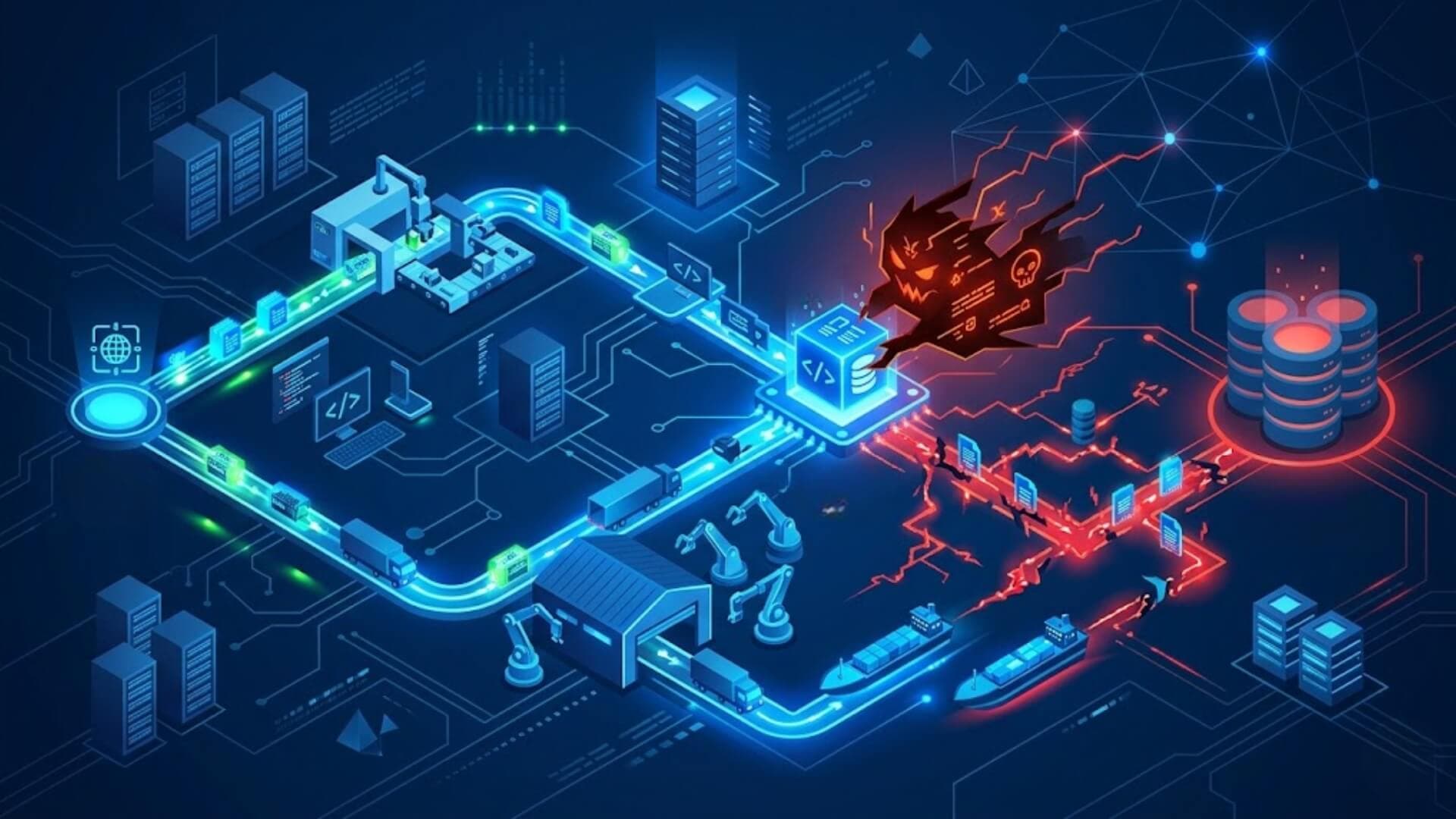
A supply chain attack has become one of the most dangerous cybersecurity threats facing businesses today. Instead of attacking a company directly, hackers target trusted vendors, software providers, or third-party services to gain access to multiple systems at once. This makes supply chain attacks difficult to detect and potentially devastating for organizations of any size.
In this article, you will learn what a supply chain attack is, how these attacks work, and 4 effective ways to prevent attacks before they cause serious damage.
What is a supply chain attack?Link to heading

A supply chain attack exploits third-party tools or services, collectively known as the "supply chain", to breach a target's systems or network. These attacks are also referred to as "value-chain attacks" or "third-party attacks".
By design, supply chain attacks are indirect: rather than targeting a victim directly, attackers go after the external dependencies that the victim relies on, often without their knowledge. A dependency is a piece of code or software, frequently written in JavaScript, provided by a third party to extend the functionality of an application.
An e-commerce platform, for example, might use dependencies to power live chat support or track visitor behavior on its site. Modern software environments can contain hundreds or even thousands of such dependencies, embedded across applications, services, and network infrastructure.
In a typical supply chain attack, the attacker compromises a cybersecurity vendor's systems and injects malicious code into a legitimate software update. When that vendor's clients install the update, trusting it as a routine, safe delivery, the malware executes and opens a backdoor into their systems.
How is a supply chain attack carried out?Link to heading
Before the attack reaches its final target, the attacker must first compromise a third-party system, tool, or application, this initial phase is known as the "upstream" attack. Entry points vary: attackers may use stolen login credentials, exploit vendors who hold temporary access to a target's environment, or take advantage of an undisclosed software vulnerability.
Once the upstream foothold is established, the "downstream" attack, the stage that directly impacts the end target, typically through their browser or device, can be delivered in a number of ways.
The upstream attack is the moment the attacker plants malicious code inside a vendor's software. The downstream attack follows when that code silently runs on end-user devices through what appears to be a routine update.
Why supply chain attacks are so dangerousLink to heading

Supply chain attacks are especially dangerous because they exploit trusted relationships between companies and their vendors, software providers, or service partners. Instead of attacking a target directly, hackers compromise a third party that already has access to the victim’s systems or data.
One major risk is the scale of impact. A single compromised software update or vendor platform can spread malware to thousands of organizations at the same time. This allows attackers to cause widespread damage quickly and efficiently.
Supply chain attacks are also difficult to detect. Since the malicious activity often comes from trusted software or legitimate services, many security systems fail to recognize the threat immediately. In some cases, attackers can remain hidden inside networks for weeks or even months before being discovered.
Beyond technical damage, these attacks can lead to serious financial losses, operational downtime, data breaches, and reputational harm. For businesses that rely heavily on third-party tools and cloud services, the consequences can be severe if proper security controls are not in place.
Common types of supply chain attacksLink to heading
Supply chain attacks can target hardware, software, applications, or third-party-managed devices. The most common attack types include:
- Browser-based attacks execute malicious code directly within end-user browsers. Attackers may compromise JavaScript libraries or browser extensions that automatically run on user devices, or they may harvest sensitive data stored in browsers, such as cookies or session tokens.
- Software attacks conceal malware inside legitimate software updates. As seen in the SolarWinds breach, systems can download and apply these updates automatically, unknowingly granting attackers a foothold on the device.
- Open-source attacks exploit weaknesses in publicly available code packages. While open-source libraries help development teams build faster, they can also be tampered with, giving attackers a channel to inject malware into any system that pulls in those packages.
- JavaScript attacks either target existing vulnerabilities in JavaScript code or embed malicious scripts directly into web pages, where they execute automatically the moment a user visits the site.
- Magecart attacks deploy malicious JavaScript to skim payment card details from checkout forms, forms that are often rendered and managed by third-party providers. This technique is also known as formjacking.
- Watering hole attacks focus on high-traffic websites frequented by a broad user base, such as site builders or government portals. Attackers probe these sites for security weaknesses, then exploit them to silently deliver malware to visitors.
- Cryptojacking hijacks a victim's computing power to mine cryptocurrency without their knowledge. This can be achieved by injecting rogue code or ads into websites, embedding cryptomining scripts within open-source repositories, or using phishing messages to trick users into installing malware.
How to detect a supply chain attackLink to heading

Anomalous outbound network traffic from trusted softwareLink to heading
One of the earliest signs of a supply chain attack is unusual network traffic originating from trusted software.
Under normal conditions, legitimate applications communicate only with a specific set of servers. If the software suddenly begins sending data to unknown IP addresses, making outbound connections at unusual times, or transferring unusually large amounts of data, it may indicate suspicious activity that requires immediate investigation.
Unexpected privilege escalation or lateral movementLink to heading
A supply chain attack rarely stops at the initial point of compromise. Attackers often attempt to escalate privileges and move laterally across the network to gain access to more sensitive systems or critical infrastructure.
Key warning signs include:
- An account or process suddenly requesting administrator privileges without a clear reason
- Legitimate software accessing folders or systems outside its normal operational scope
- Unusual connections between devices within the internal network, especially involving service accounts or system accounts
Hash and code signature verification failuresLink to heading
Every legitimate software file has a unique hash value and digital signature generated by the developer. When attackers inject malicious code into software, these values change, making them an important indicator of tampering.
Security teams should verify:
- File hash: Compare the hash of the running file with the original hash published by the vendor. Any mismatch may indicate the file has been modified.
- Code signing certificate: Confirm that the digital signature is still valid, has not been revoked, and genuinely belongs to a trusted vendor.
- Subresource Integrity (SRI): For external JavaScript libraries, SRI allows browsers to verify file integrity before execution.
Behavioral analysis and EDR alerts on known-good binariesLink to heading
This is one of the most advanced and effective defense layers against supply chain attacks. Instead of relying solely on known malware signatures, behavioral analysis monitors how software behaves in real-world environments and flags activities that deviate from normal patterns.
Modern Endpoint Detection & Response (EDR) platforms can detect suspicious actions even from fully trusted processes, such as:
- A legitimate IT tool suddenly spawning unusual child processes
- Software reading from or writing to memory regions or registry areas unrelated to its normal function
- A familiar binary executing shell commands or scripts it has never executed before
How to defend against supply chain attacksLink to heading

Any attack that exploits or tampers with third-party software, hardware, or applications falls under the category of a supply chain attack. Most organizations work with a wide range of external vendors, each of whom may rely on dozens of their own dependencies across the tools and services they provide.
For this reason, achieving complete protection against supply chain attacks is exceptionally difficult, and in many cases, simply not realistic. That said, organizations are not without options. There are several proactive strategies that can meaningfully reduce exposure to the most common attack methods:
Run a third-party risk assessment
Evaluating the security posture of external vendors before and during any engagement is a critical first step.
This can include testing third-party software before it is deployed in a production environment, requiring vendors to comply with defined security policies, implementing Content Security Policies (CSP) to control which resources a browser is permitted to load, and using Subresource Integrity (SRI) checks to verify that JavaScript files have not been tampered with.
Implement Zero Trust
A Zero Trust framework operates on the principle that no user, whether an employee, contractor, or vendor, should be implicitly trusted within an organization's network. Every user and device must be continuously validated and monitored. This approach limits an attacker's ability to gain access through stolen credentials and prevents lateral movement through the network even if an initial breach does occur.
Use malware prevention tools
Security solutions such as antivirus software continuously scan devices for malicious code, blocking threats before they can execute. While not a complete defense on their own, these tools form an important layer in a broader security strategy.
Adopt browser isolation
Browser isolation sandboxes web page content before it executes on end-user devices. Any malicious code is intercepted and neutralized in an isolated environment, preventing it from ever reaching the underlying system or its data.
Detect shadow IT

Shadow IT refers to applications and services that employees use without the knowledge or approval of their IT department. Because IT teams are unaware of these tools, they cannot assess or patch any vulnerabilities they may contain. Deploying a cloud access security broker (CASB) with shadow IT detection capabilities allows organizations to identify unauthorized tools in use across their environment and evaluate them for potential security risks.
Enable patching and vulnerability management
Organizations that integrate third-party tools into their operations bear responsibility for ensuring those tools remain free of known security flaws. While it may be impossible to eliminate every vulnerability, conducting regular audits and promptly disclosing and patching known issues is a baseline obligation that should not be overlooked.
Prevent zero-day exploits
Supply chain attacks frequently leverage zero-day vulnerabilities, flaws that have not yet been identified or patched by the software vendor. There is no guaranteed method for anticipating every zero-day threat, but browser isolation tools and properly configured firewalls provide an important defensive layer by containing and blocking malicious code before it has the opportunity to execute.
>>> Has your WordPress website been equipped with a dedicated firewall yet? W7SFW is specifically designed for WordPress, enabling real-time detection and blocking of suspicious access.
ConclusionLink to heading
A supply chain attack can happen quietly, which is what makes these attacks so dangerous. As organizations continue to depend on external vendors and cloud-based tools, supply chain security can no longer be treated as an afterthought. Regular vendor assessments, stronger monitoring, and proactive security practices all play an important role in reducing risk and preventing attacks before they spread further.